The Enchanting Brindle Boxer Puppy: A Friendly Guide
Introduction
Brindle Boxer puppies win hearts wherever they go thanks to their tiger-striped coats and endless enthusiasm. This quick guide outlines what to expect from these playful guardians, how they came to be, and the simple steps that keep them healthy and happy.
Characteristics of the Brindle Boxer Puppy
Physical Appearance
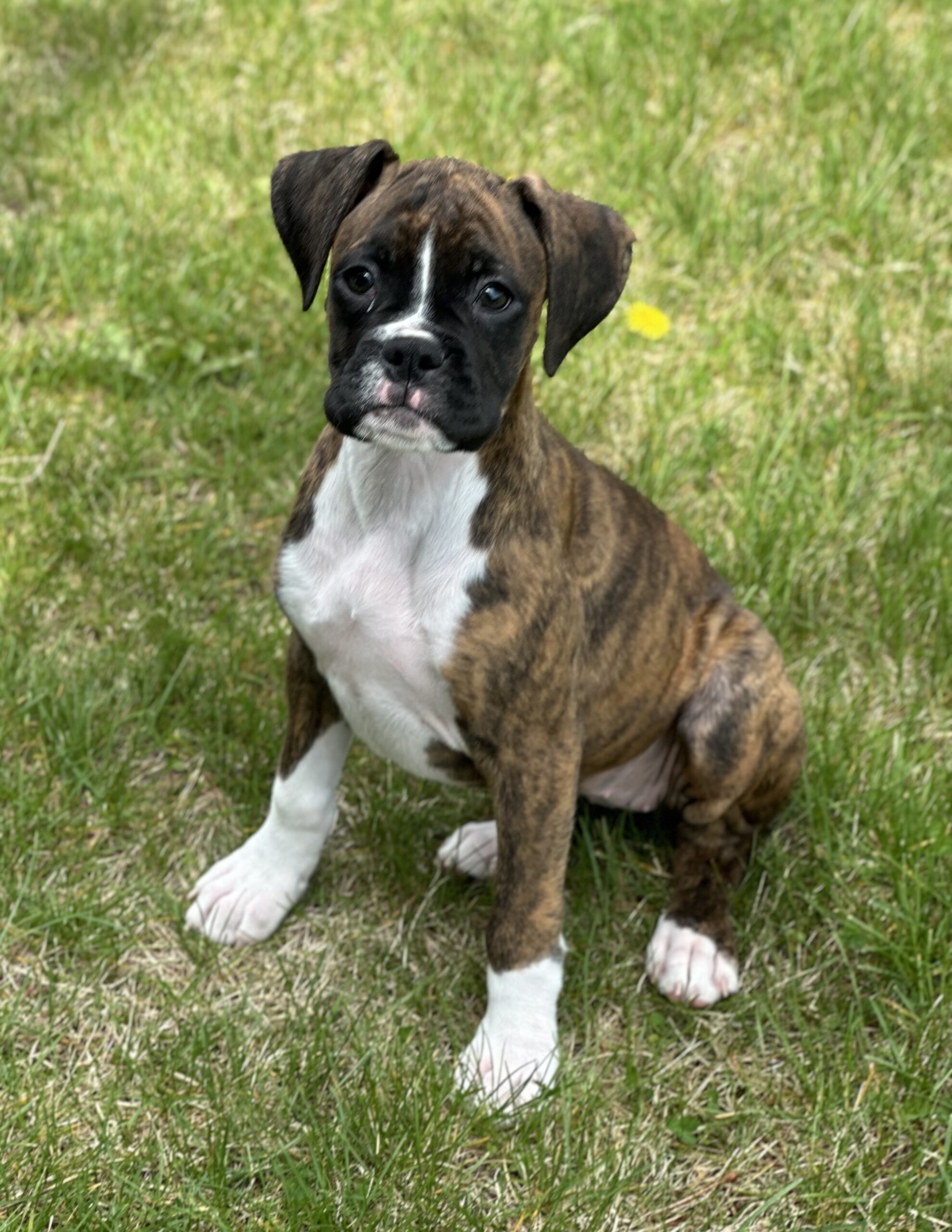
A dark stripe overlay on a fawn background gives the brindle coat its signature look; no two patterns are exactly alike. Puppies grow into sturdy, square-jawed adults with glossy short hair, bright dark eyes, and either natural folded ears or a tidy cropped silhouette.
Despite their tough appearance, they are athletic rather than heavy, built for swift turns and spirited play sessions in the yard.
Personality Traits
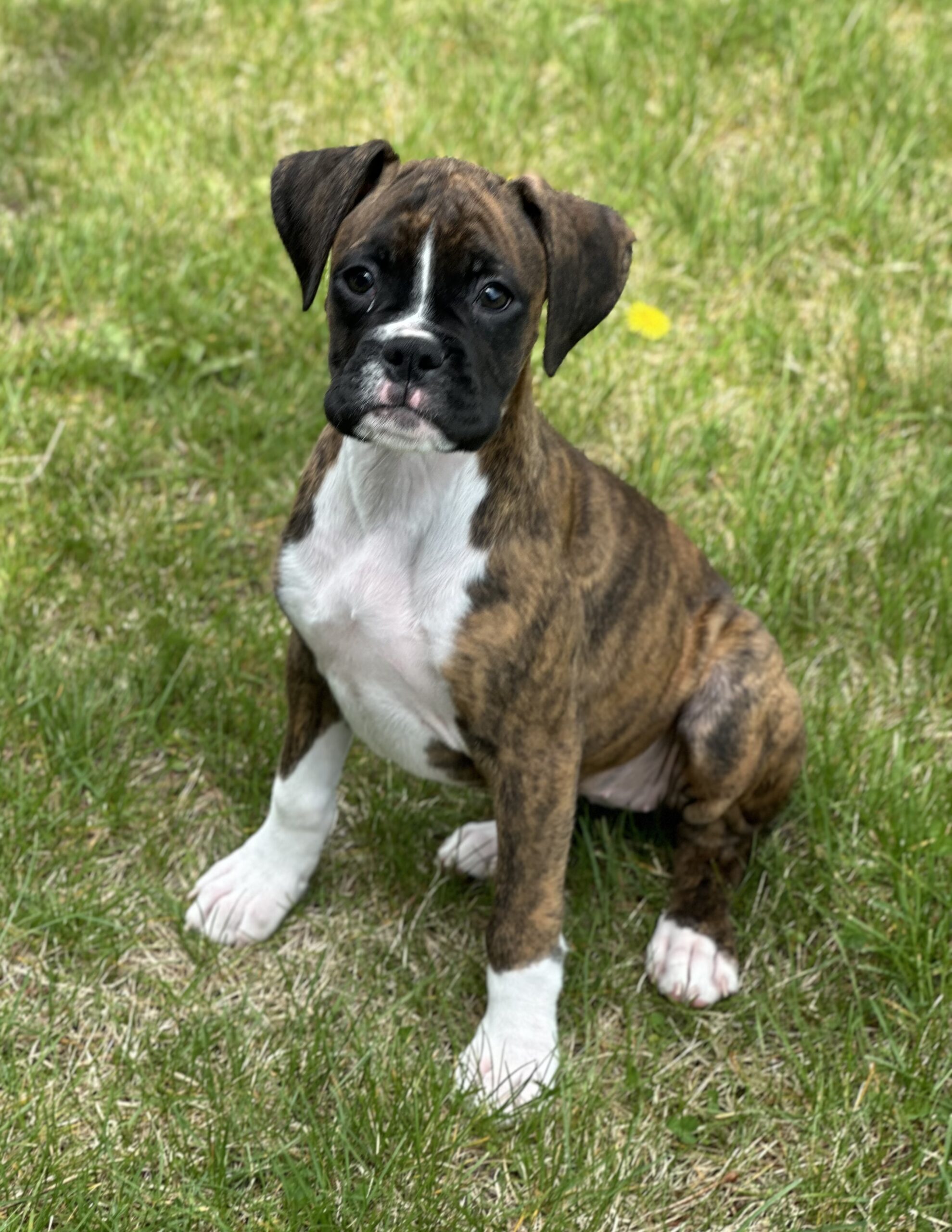
Expect a comic spirit packaged with loyalty: these pups adore family life, learn routines quickly, and stay close to their people. Early games and praise-based lessons channel their energy into good manners, while their natural watchfulness provides gentle, non-aggressive home security.
History of the Brindle Boxer Puppy
Origin and Development
Boxers emerged in late-1800s Europe through crosses of agile hunting mastiffs and compact bulldog types. The brindle coloring tagged along from those early hunting ancestors and remained a favorite pattern as the breed shifted from field worker to cherished household companion.

Popularity and Recognition
Over the past century the breed spread across continents, earning formal recognition in major kennel clubs and consistently ranking among the top family dogs worldwide. The brindle variety remains especially sought after for its dramatic coat.
Care and Training for the Brindle Boxer Puppy
Health and Nutrition
Like any large-breed puppy, a brindle Boxer benefits from measured meals of quality food, steady growth, and routine vet visits to monitor joints and overall condition. Fresh water, age-appropriate calories, and controlled weight gain lower future orthopedic risks.

Exercise and Training
Daily walks, interactive toys, and short training games burn mental and physical energy. Introduce new sights, sounds, friends, and surfaces during the first four months to raise a confident, adaptable adult. Rewards and consistency work far better than force.
Conclusion
A well-socialized brindle Boxer puppy matures into a devoted, fun-loving partner for active households. Provide exercise, clear guidance, and regular health care, and the stripes you admired at eight weeks will still accompany a wagging tail for years to come.

Future Research and Recommendations
Continued study of coat genetics and breed-specific health will help preserve the Boxer’s unique look and vitality. Prospective owners should meet breeders who health-test parent dogs, raise litters indoors, and offer lifetime support. Commit to training classes, routine vet care, and daily interaction, and your brindle companion will repay you with exuberant affection every single day.