Spot the Feline: The Craft and Science of Visual Search
Introduction
In today’s connected world, tracking down a photo of a cat feels like second nature. Behind the scenes, however, the task blends creativity with engineering, where algorithms echo human perception. This piece explores how machines learn to see, using the humble cat photo as a lens on the broader field of visual recognition.

The Challenge of Image Recognition
The Complexity of Visual Data
Pictures are dense with information. Unlike sentences built from words, images arrive as grids of colored dots. Teaching software to turn those dots into “cat” demands layered logic that can pick out whiskers, ears, and fur amid background clutter.
Machine Learning and Deep Learning
Modern systems improve by example. By feeding millions of labeled photos into neural networks, computers refine internal patterns until “cat” becomes a reliable category rather than a lucky guess.

Techniques for Spotting a Cat Photo
Image Search Engines
Mainstream search portals accept a keyword or a snapshot and return visually similar results. Under the hood, they compare color histograms, edge maps, and learned embeddings to surface the closest match.
Computer Vision APIs
Cloud services offer ready-made models that tag uploads with descriptors like “pet” or “mammal,” letting apps filter galleries for feline content without writing code from scratch.

Neural Networks and Convolutional Neural Networks (CNNs)
CNNs slide small filters across an image, detecting low-level motifs that stack into higher-level concepts. When enough “pointy ear” and “triangular nose” signals light up, the network outputs “cat.”
The Evolution of Visual Search
From Basic to Advanced Recognition
Early programs measured simple geometries; today’s architectures grasp context, pose, and even partial occlusion, turning casual snapshots into searchable data.

The Role of Big Data
Open galleries and public datasets supply the variety needed for models to generalize across breeds, lighting conditions, and backgrounds.
The Impact of Visual Recognition
Applications in Various Fields
Beyond cute pets, the same pipeline aids medical screening, stock tracking, and media curation, quietly speeding up workflows once handled by human eyes.

The Ethical Considerations
With power comes responsibility: developers must weigh consent, fairness, and transparency to keep the technology trustworthy.
Conclusion
Locating a cat photo is a small window into a vast discipline. As algorithms grow sharper and datasets richer, tomorrow’s searches will feel less like queries and more like intuition.

Future Directions
The road ahead holds several promising avenues:
–
Improved Accuracy and Speed
Leaner architectures and specialized chips promise near-instant results without sacrificing precision.
–
Explainable AI
Visual heat-maps and natural-language rationales will let users see why a model barks “dog” or purrs “cat.”
–
Customization and Personalization
Fine-tuning on niche collections will empower creators, retailers, and researchers to mold recognition around their unique visual vocabularies.
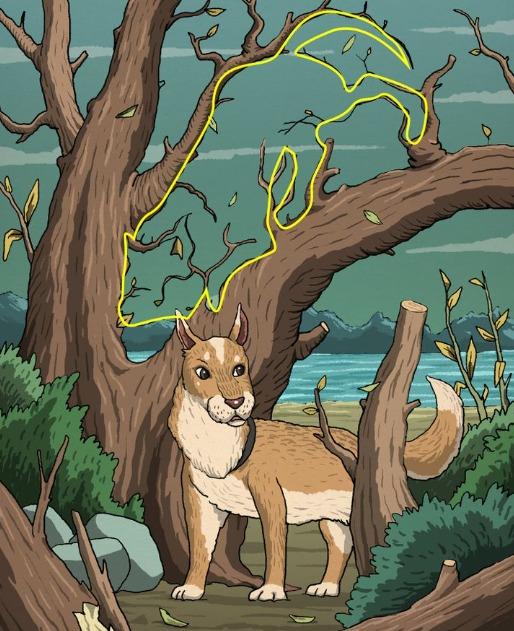
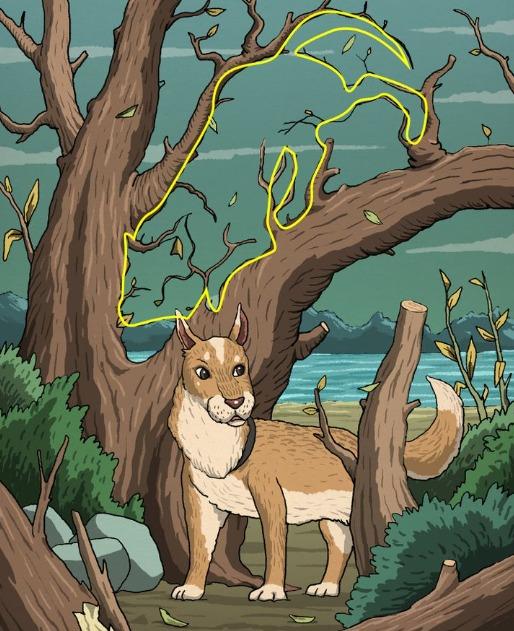
In the end, every successful “find the cat” moment hints at a future where visual data answers questions before we finish asking them.