How Much is a Purebred Shih Tzu: A Friendly Guide
Introduction
The Shih Tzu, with its flowing coat and cheerful personality, has long been a favorite companion around the globe. Before falling for those big dark eyes, many soon-to-be owners wonder what kind of budget they should prepare. This guide walks you through the main elements that shape the price tag, typical upfront and ongoing costs, and tips for planning ahead—without overwhelming detail or jargon.
Factors That Shape the Price
1. Breeder Practices and Reputation
Ethical breeders who raise puppies in clean, social environments, perform routine health checks, and offer lifetime support usually ask more than casual sellers. The extra fee often reflects quality food, vaccinations, early socialization, and the peace of mind that comes with transparent paperwork.
2. Pedigree and Lineage
Puppies descending from award-winning lines or those cleared for show prospects can carry a premium. For most pet homes, however, a loving temperament and good health matter far more than a long list of champions.
3. Health Screenings
Reputable breeders screen for common breed issues such as eye, hip, or breathing concerns. A puppy whose parents have recent clearances may cost more initially but can save worry and vet bills later.
4. Coat Type and Color
Rich gold, striking black, or rare patterns often turn heads, yet every Shih Tzu needs daily brushing whatever the shade. Choose personality first; the coat is simply the wrapping.
Typical Price Range

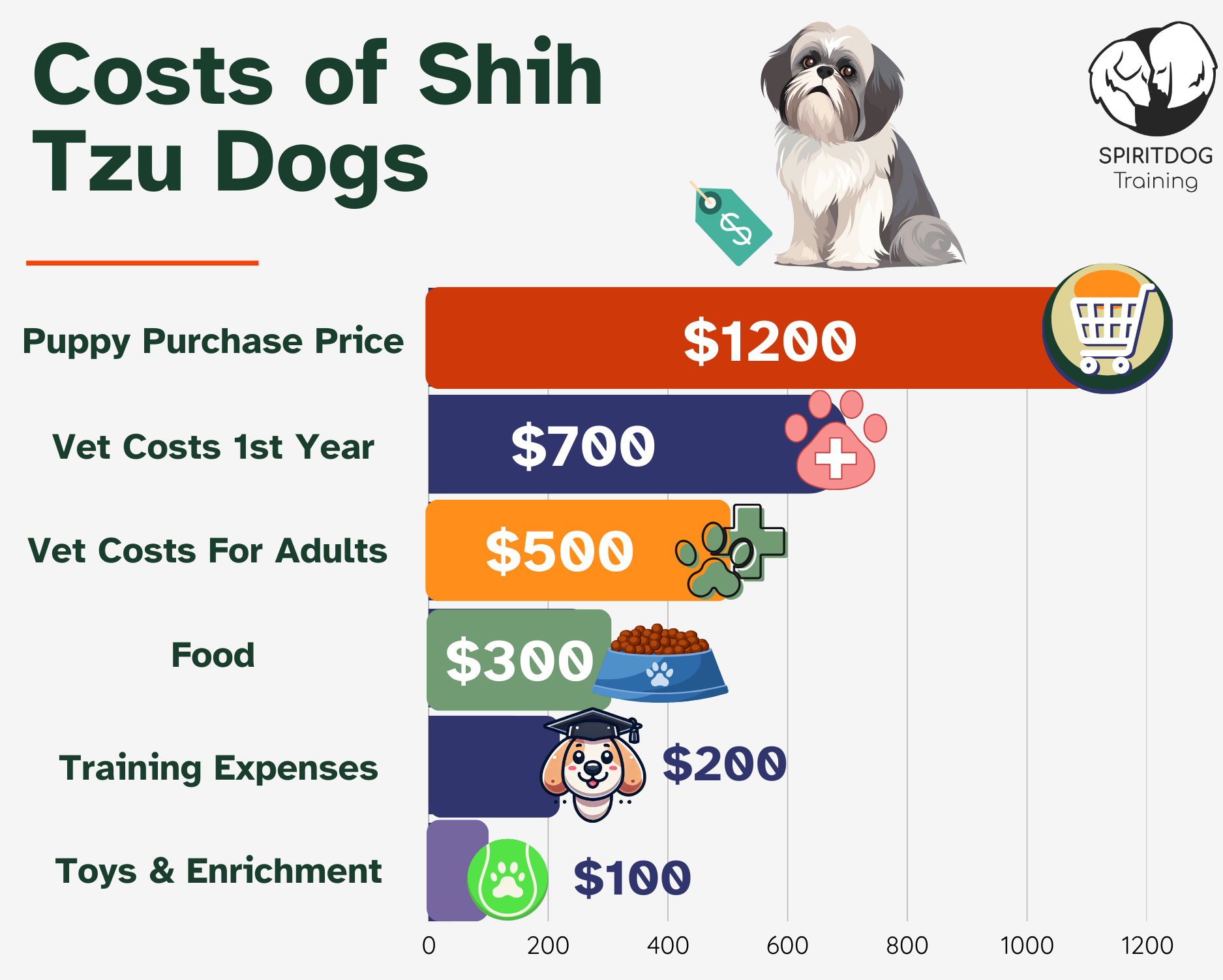
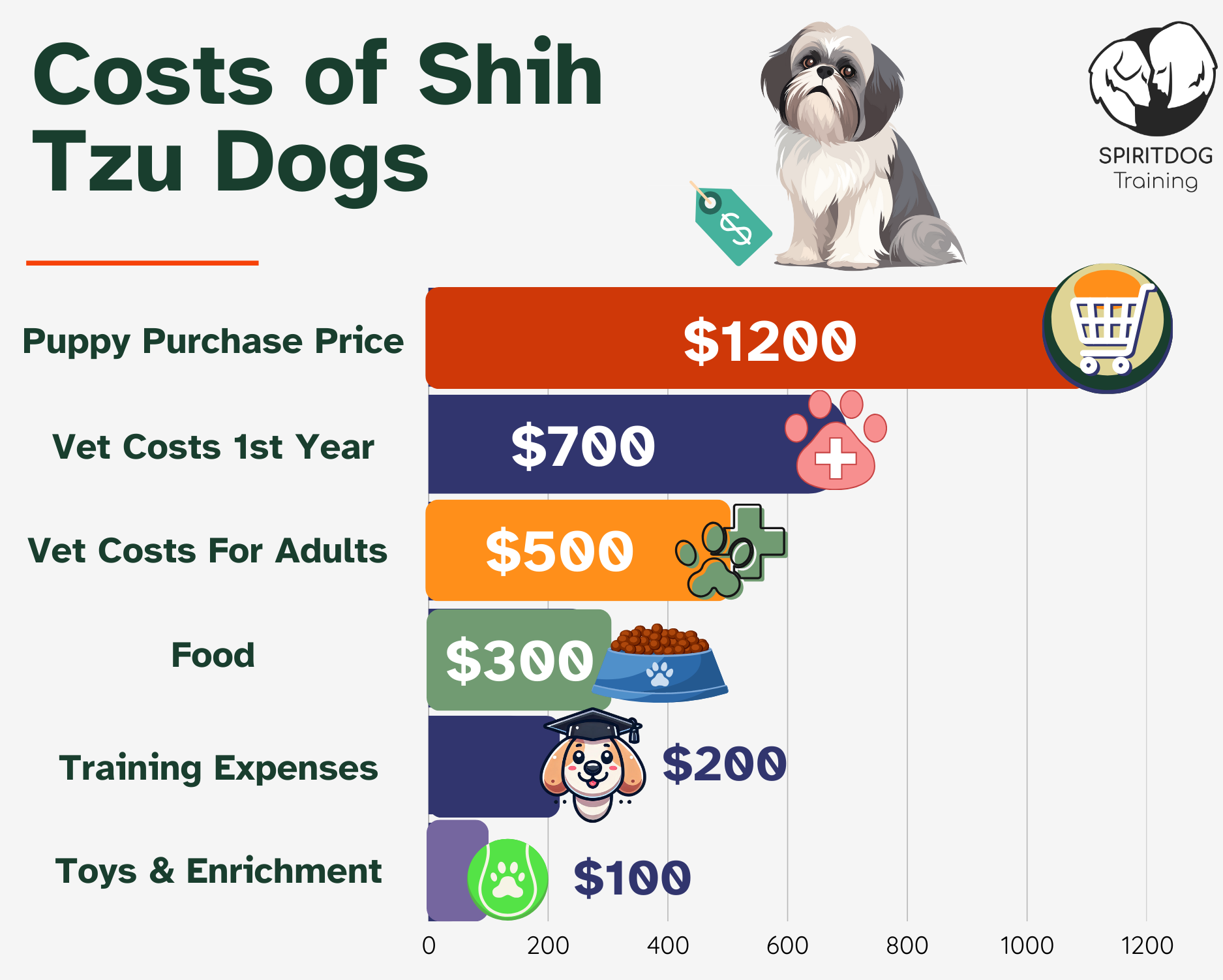
1. Purchase Price
In North America and much of Europe, pet-quality Shih Tzu puppies from responsible sources generally fall between moderate and upper-moderate three-figure sums, while show prospects may reach low four figures. Regional demand, season, and litter size all nudge the numbers up or down.
2. First-Year Essentials
Beyond the puppy itself, new owners should plan for:
– Core vaccines and parasite prevention

– Spay or neuter surgery if not already done
– Microchip and initial registration
– A wellness exam within the first week

Prices vary by clinic and city, so call local vets for ballpark quotes.
3. Routine Yearly Costs
Once settled, a Shih Tzu’s upkeep includes:
– Balanced small-breed kibble or fresh food

– Professional or home grooming every 4–8 weeks
– Rotating toys, treats, and a comfortable bed
– Annual check-ups, booster shots, and dental care

Setting aside a modest monthly fund keeps these predictable expenses stress-free.
Conclusion
The sticker price of a Shih Tzu is only the opening chapter. By choosing a caring breeder, budgeting for everyday needs, and planning for the occasional surprise, you will be ready to welcome a loyal, affectionate companion for years of tail-wags and face-licks.

Next Steps
Spend time visiting breeders or rescue groups, ask about health guarantees, and meet parent dogs when possible. Read up on grooming basics and consider pet insurance to cushion unforeseen vet visits. A well-prepared home turns the dream of Shih Tzu ownership into a smooth, joyful reality.